How fibreglass pool resurfacing differs from concrete
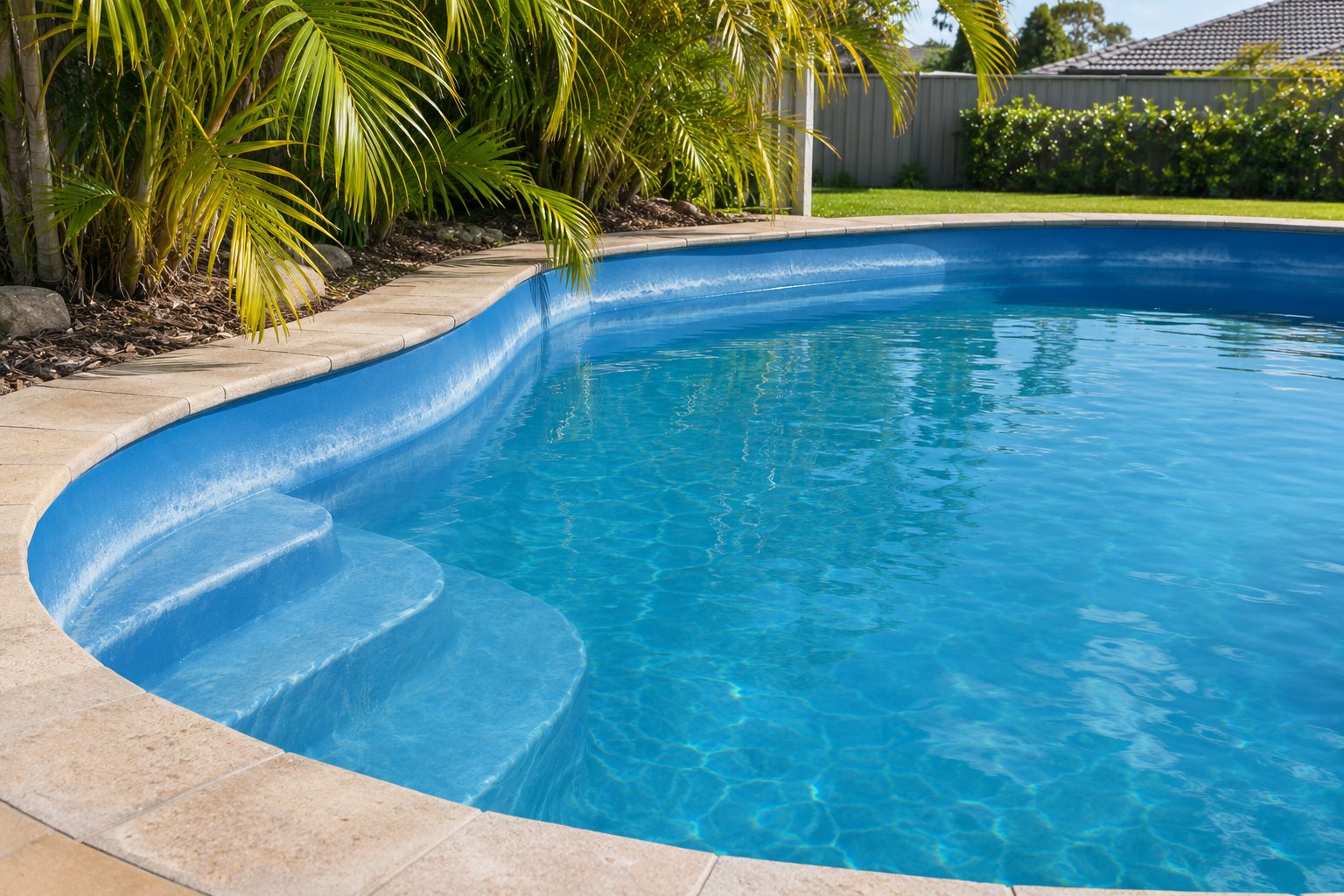
Fibreglass pool resurfacing in Coffs Harbour is a different job from resurfacing a concrete pool. There is no cement surface to take back to the shell: the surface of a fibreglass pool is a resin layer. Owners describe a surface that has faded, turned chalky or feels rough. This page explains how recoating differs, what the one technical source this site found says, and what to ask. We are a referral service: we pass your enquiry to a local pool contractor, who carries out the work.
The sources used here talk about the lining and the resin layer, so ask the contractor to show you which layer is worn and what the repair involves. Concrete pools are covered on the pebblecrete and quartz page, and tiles and coping on pool renovation.
What the trade article says about fibreglass linings
The only technical source this site found on fibreglass pool resurfacing is a 2014 trade magazine article whose publisher country is inferred, not confirmed, so treat it as context. It describes two ways of applying a new lining: hand-applied, where glass mat is laid and resin is rolled over it, and spray-applied. It names two resin types, polyester and vinyl ester. It names "fibre bloom" as a failure mode and describes water ingress and osmosis as risks, along with poor workmanship and unsuitable materials. It also says pool paints are non-structural and unsuitable for cracked or leaking pools.
This site found no Australian technical data on recoating fibreglass pools, so it makes no claim about methods, products or how long a recoat holds up. If a contractor tells you your pool has fibre bloom, ask them to show you, explain the cause and describe the repair in writing.
Where coatings fit, and where they do not
Coating data sheets treat fibreglass differently from one another. The first chlorinated rubber sheet says it is not suitable over existing epoxy or fibreglass. A second chlorinated rubber sheet, from a New Zealand maker, says fibreglass only if sealed with epoxy first. Those are two products, and others will differ. The painting and epoxy page sets out the weather, drying and fill limits that apply to the day a coating goes on.
If the pool is cracked or leaking, the trade article says pool paints are unsuitable. Ask what is causing the problem before asking what goes over it. The causes of surface failure are in why pool surfaces fail.
What to ask before a fibreglass pool is recoated
- What is under the existing finish. Previous paint or a previous recoat decides what a new product can go over.
- How the surface is prepared, and how dust and any waste are handled.
- Which product, with the data sheet, and whether the lining is hand-applied or sprayed.
- Whether water ingress, osmosis and leaks are checked before anything is applied.
- Who gives the warranty, on what written terms, and what conditions apply.
- How the pool is emptied and where the water goes. Ask Coffs Harbour City Council before it is emptied, and ask the contractor how groundwater pressure is managed.
- The start-up instructions, in writing, for the product used.
Licence or certificate
The NSW swimming pool repairs and servicing page lists painting and surfacing, including rendering or applying surface coatings, and says a licence or certificate is needed for that category. It does not name fibreglass relining, and this site does not say which category it falls into. Ask the contractor which licence or certificate they hold, check it on the NSW licence check, and ask Building Commission NSW on 13 27 00 if you are unsure.
If the work counts as residential building work, NSW Government pages say a written contract is needed above $5,000 including GST, as set out on the contracts page. The pages do not say whether that applies to pool work. The licence, contract and warranty page goes through the gaps.
What this page cannot do
It cannot tell you why your fibreglass pool has faded or chalked, because this site found no Australian source that explains it, and it cannot say whether a recoat, a repair or something else is right. It cannot say which licence category fibreglass relining falls into, because the NSW pages do not name it. It cannot see your pool, so it cannot say whether there is bloom, water ingress or osmosis. Ask the contractor to inspect it, and ask for the findings and the data sheets in writing.
Check the current rules before you rely on this
This page describes fibreglass pool recoating, the one technical source found and where the NSW licence and contract pages fit. It describes the rules in general terms as they stood in November 2026. Standards, forms, thresholds and fines change.
The authoritative sources are Pool and Spa Marketing, fibreglass pool resurfacing (trade magazine, 2014, country inferred as Canada), Nutech Paint, NuPool chlorinated rubber pool paint technical data sheet, APCO Coatings, Poolkote chlorinated rubber pool paint product data sheet (2017), Coating Technologies, Epotec Aqua 1K acrylic pool coating data sheet, NSW Government, swimming pool repairs and servicing work (licence page) and NSW Government, building contracts and home building compensation. Where anything here differs from those sources, they are right and we are not.
We are not pool contractors, builders, regulators or lawyers. For what applies to your job, ask the contractor which licence or certificate they hold and check it on the NSW licence check, then ask Building Commission NSW (13 27 00). Ask Coffs Harbour City Council about emptying the pool, registration and the pool barrier, and SafeWork NSW about dust and chemicals.
Accurate at the time of writing, November 2026. Always check the source before relying on it.