What pebblecrete pool resurfacing involves
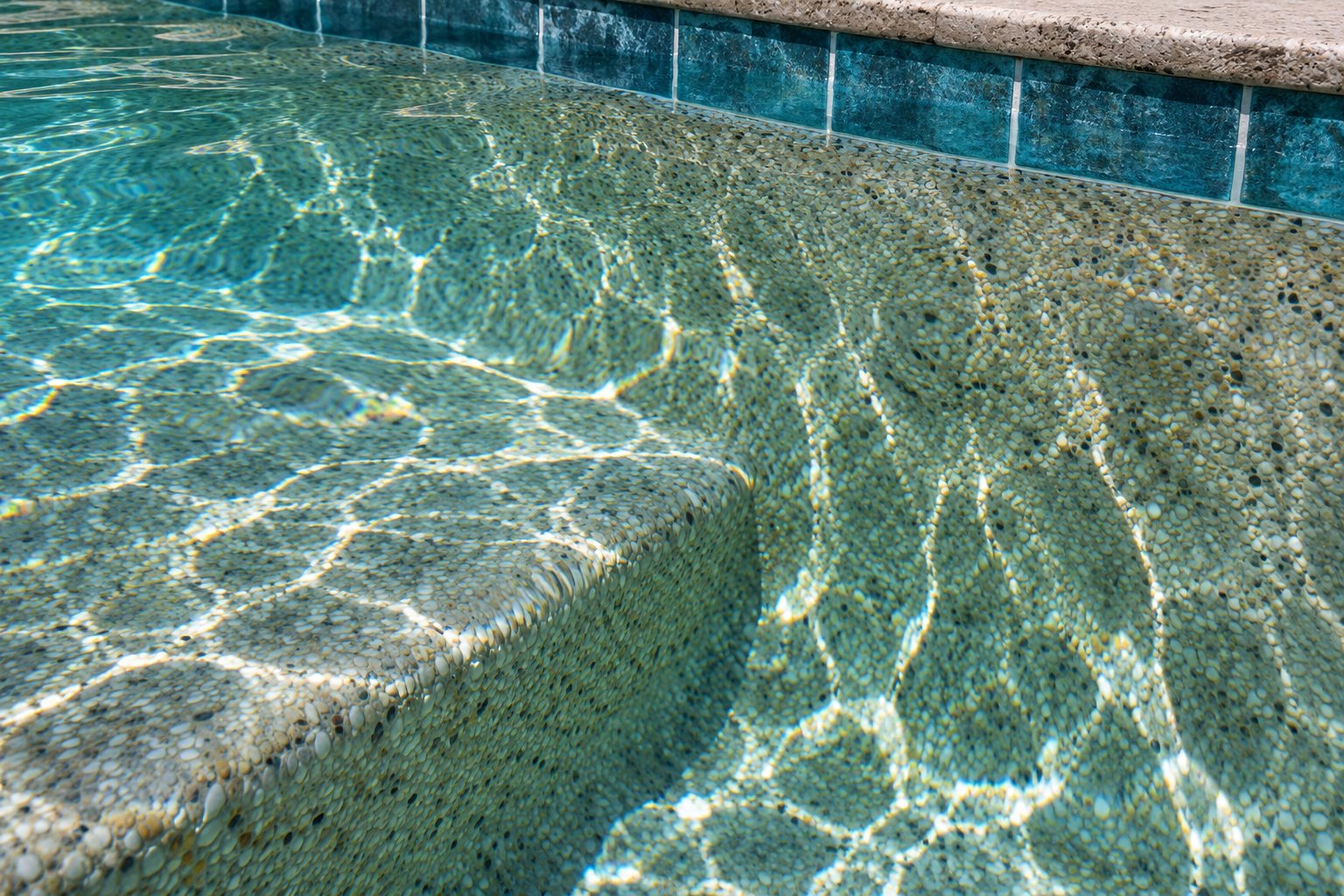
Pebblecrete pool resurfacing in Coffs Harbour means taking a worn aggregate finish back to a sound surface and applying a new one, or coating it where the product's data sheet allows. In the sources used here, pebblecrete and quartz are the two main names for exposed aggregate finishes on concrete pools. This page explains how they differ, how a resurface is carried out and what to ask. We are a referral service: we pass your enquiry to a local pool contractor, who carries out the work.
Pebblecrete, quartz, polished aggregate and glass bead
A magazine for the accommodation trade describes a pebble finish as plaster with added aggregate and calls it more durable and stain-resistant than plain plaster. A coatings maker's article says pebblecrete is hand-trowelled, so the installer's skill affects how it looks and how it ages. Both are trade claims, not standards, and the magazine piece and the maker's article are not neutral sources.
A 2017 trade magazine article, whose publisher country is inferred rather than confirmed, describes exposed quartz as removing the cement cream to expose silica aggregate. One South African pool quartz data sheet describes a thin dry-powder render applied over a base that has cured for 28 days, then acid washed the next day to expose the quartz. That is one product's method, and other products differ. The same trade magazine says finishes can be wet-polished with machines to a smooth texture, so ask whether a polished finish is on offer and which product it uses.
Glass bead appears as another aggregate variant, but this site found no technical source for it, so ask what it is made from and for the data sheet. Finishes of this kind are sold under names such as Quartzon and Marblesheen. Ask the contractor which product is meant, because the name alone does not tell you what goes on the pool.
How a pebblecrete or quartz resurface is carried out
The stages below are assembled from trade and maker sources, and the sequence is general. The contractor decides the method for your pool.
| Stage | What the sources describe | What to ask |
|---|---|---|
| Assessment | Surface, structure, tiles and equipment are looked at before work starts. | Who inspects, and what is written down. |
| Draining | The pool is emptied. Groundwater pressure is a general risk once a pool is empty. | How pressure is managed, and where the water goes. See the draining and dust rules. |
| Removal | Wire brush, chisel, pick or jackhammer where needed, and removal of chalky material. One quartz sheet says old pools are taken back to the original shell. | How much comes off, and how dust is controlled. |
| Sounding and repair | One epoxy guide taps the surface with a notched hammer and repairs soft, crumbly or hollow areas first. | How hollow areas are marked, removed and repaired. |
| Etch and neutralise | Acid etching and neutralising are described, with method and strength set by each product. | The maker's method, in writing. |
| Apply, cure, fill, start up | Cure and fill times and start-up care differ by product. | The data sheet and written start-up instructions. |
One epoxy coating guide says that if more than 10 per cent of the pool area is unsound, all of the old Marblesheen or Quartzon is removed and the shell is treated as new. That is one guide's rule for one coating, not a general one. It shows why a quote should say how much of the old surface the contractor expects to remove and what happens if more is found. The epoxy guide for Marblesheen and Quartzon surfaces and the guide for pebblecrete also differ on some points, which is another reason to ask for the sheet that matches the product. The process and start-up page follows the stages in more detail.
How aggregate finishes age
The coatings maker lists signs of an ageing pebblecrete surface: random cracks, worn areas, black and rust staining, calcium build-up, hollow areas, and sharp or loose pebbles that cut feet or clog filters. The signs guide sets out what each can mean.
A news item from one regional council about a pebblecrete lining in a heated pool explains why patching is not always the answer. It says water gets under the coating as the surface deteriorates, causing more of it to flake off, and after repeated patches the engineer advised full replacement. That was one lining in one pool, but it is a reason to ask whether a repair or a full resurface is proposed and why. The causes are covered in why pool surfaces fail.
Choosing between pebble and quartz
The sources compare these finishes very little, and they disagree about how long finishes last. Ranges published by makers and trade publishers differ widely, from a few years to a couple of decades, and depend on water chemistry, use and installation quality. So ask for the data sheet and the written warranty terms rather than a number. More useful questions are whether the shell is sound, whether the pool runs on salt or chlorine, and whether you can see a sample of the exact product. The comparison guide sets pebble and quartz beside paint and tile, and replastering and render covers the plainer cement finish.
What to ask a Coffs Harbour contractor
- Which product, by name, with the data sheet. Aggregate finishes vary in quality and in method.
- How much of the old surface comes off, and what happens if more hollow areas turn up once it is off.
- Where the water and slurry go. Pool water, backwash and slurry should not go to the stormwater drain. Ask Coffs Harbour City Council before the pool is emptied. Concrete and cement slurry is a pollutant under NSW law.
- How dust is controlled. Silica controls are required when cutting or grinding concrete, per SafeWork NSW.
- Start-up instructions and warranty terms, in writing, and who gives each.
- What is in the price. The cost guide lists what a quote should itemise, and pool renovation covers tiles and coping.
Licence or certificate
NSW Government pages list pool surfacing and surface coatings inside the swimming pool repairs and servicing category and say a licence or certificate is needed for that category, per the NSW licence page. The pages do not map pebblecrete or quartz to a category, so this site does not either. Check the contractor's licence category and expiry on the NSW licence check and ask Building Commission NSW on 13 27 00 if you are unsure. The licence, contract and warranty page sets out what the pages do and do not say.
What this page cannot do
It cannot tell you which finish suits your pool, because that depends on the shell, the water and the product the contractor proposes, and the sources compare finishes very little. It cannot say how long a finish will hold up, what it will cost, or which licence category a particular resurface needs. It cannot see your pool, so it cannot say whether the old surface can be coated or has to come off. Ask the contractor for the data sheet and the written terms, and ask Coffs Harbour City Council how the pool may be emptied.
Check the current rules before you rely on this
This page describes pebblecrete and quartz pool finishes, how a resurface is carried out and where the NSW licence wording and silica controls fit. It describes the rules in general terms as they stood in November 2026. Standards, forms, thresholds and fines change.
The authoritative sources are NSW Government, swimming pool repairs and servicing work (licence page), Luxapool, epoxy pool coating application guide for Marblesheen and Quartzon surfaces (VER1601), Cemcrete, Pool Quartz data sheet (March 2026, product-specific), Pool and Spa Marketing, best practices for completing concrete pool interiors (trade magazine, 2017, country inferred as Canada) and SafeWork NSW, work safely with crystalline silica and engineered stone. Where anything here differs from those sources, they are right and we are not.
We are not pool contractors, builders, regulators or lawyers. For what applies to your job, ask the contractor which licence or certificate they hold and check it on the NSW licence check, then ask Building Commission NSW (13 27 00). Ask Coffs Harbour City Council about emptying the pool, registration and the pool barrier, and SafeWork NSW about dust and chemicals.
Accurate at the time of writing, November 2026. Always check the source before relying on it.